Wednesday, July 26, 2006

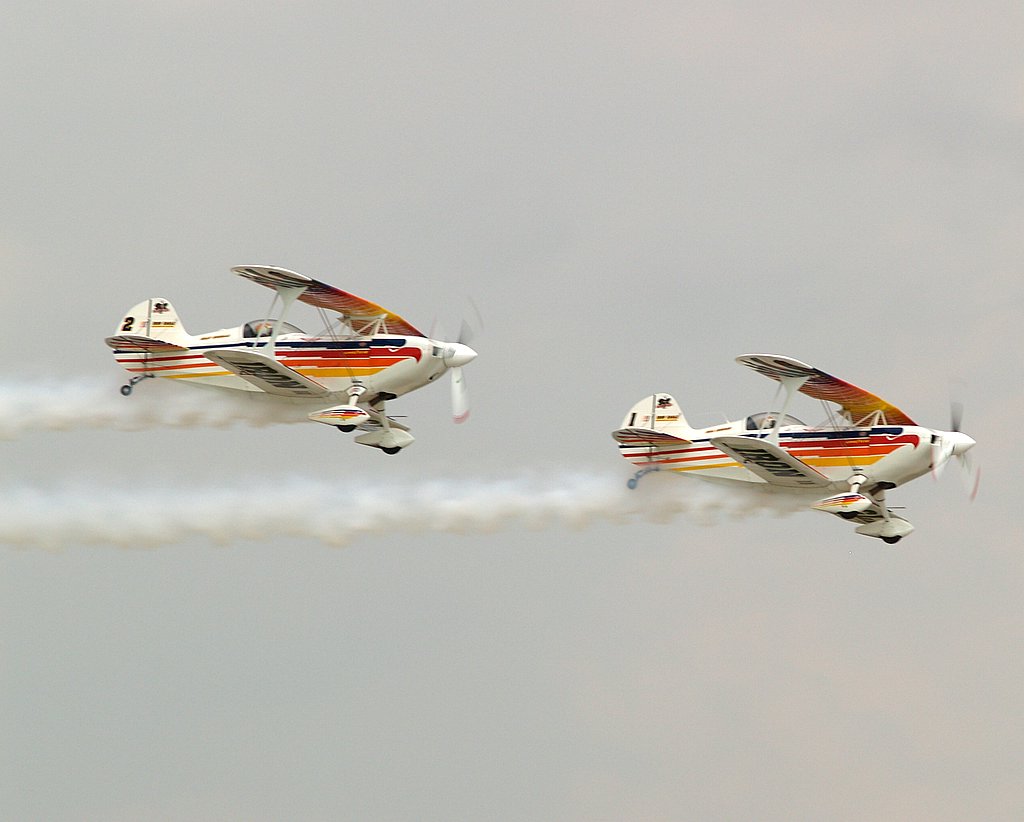
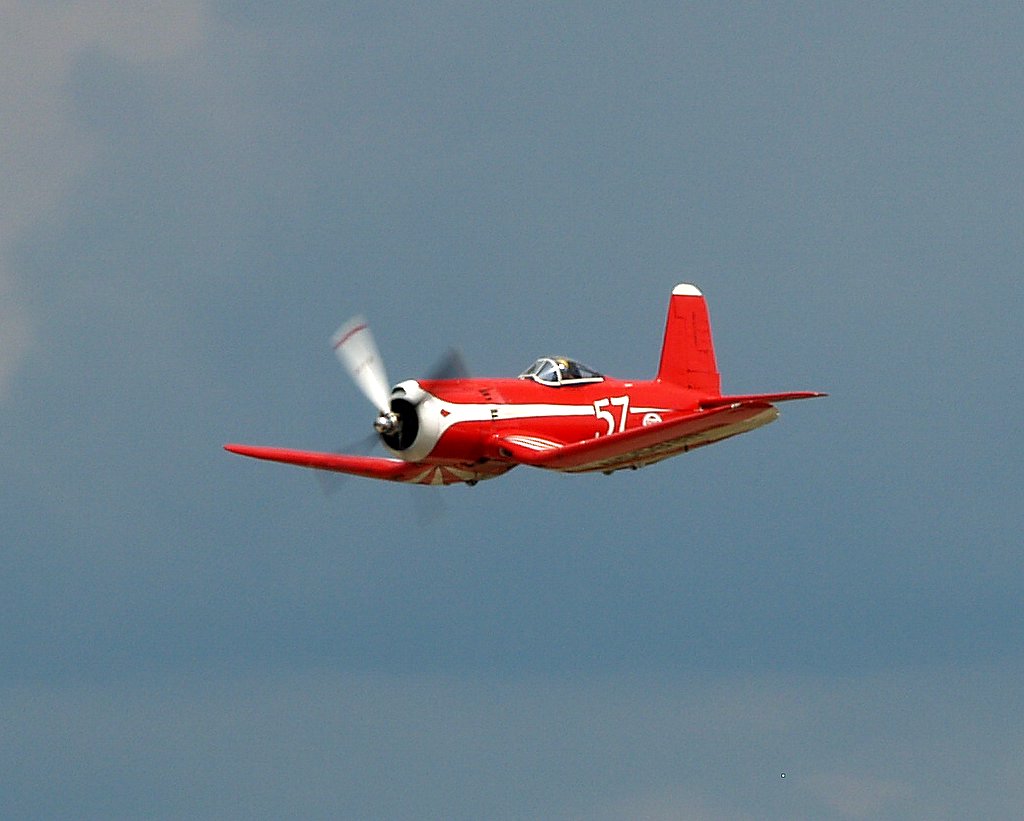
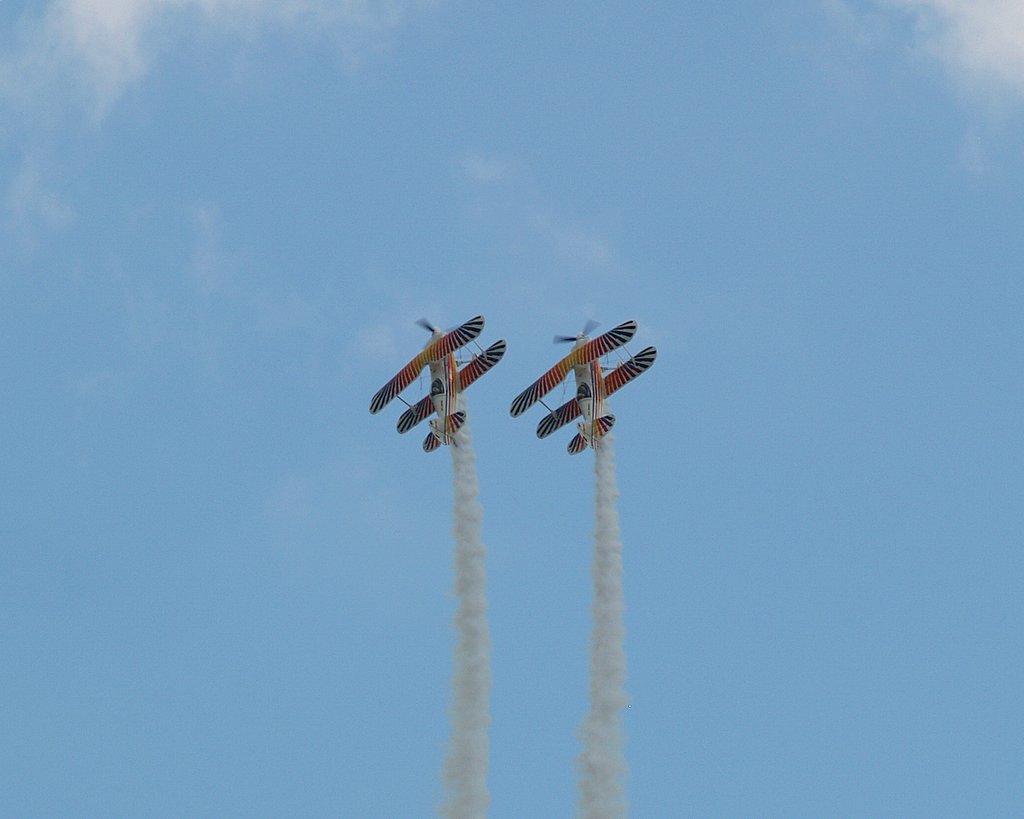
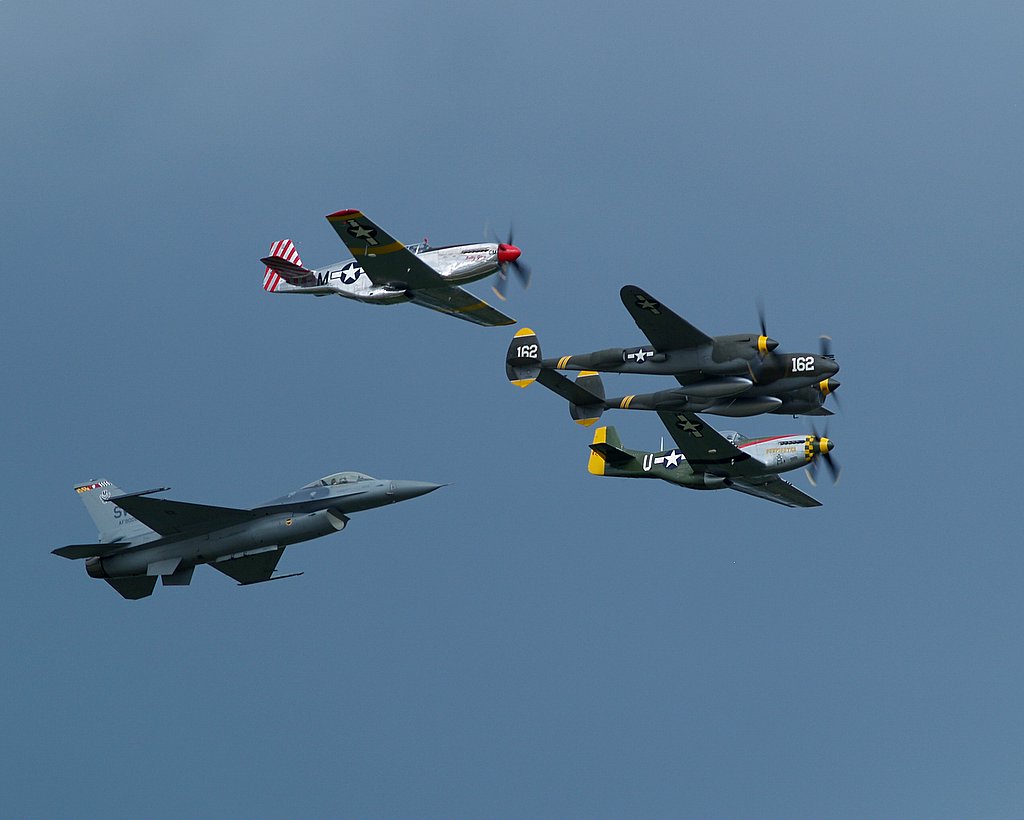
A few pix from Day Two

I hope these look ok - the laptop is terrible for editing.

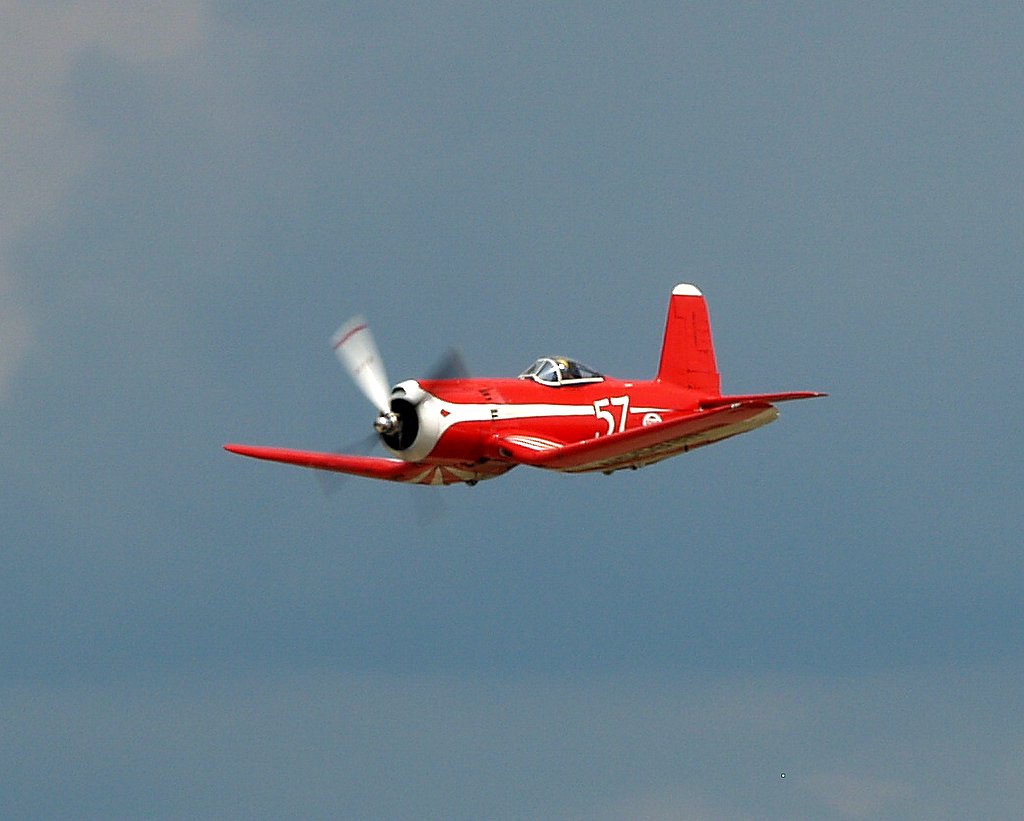
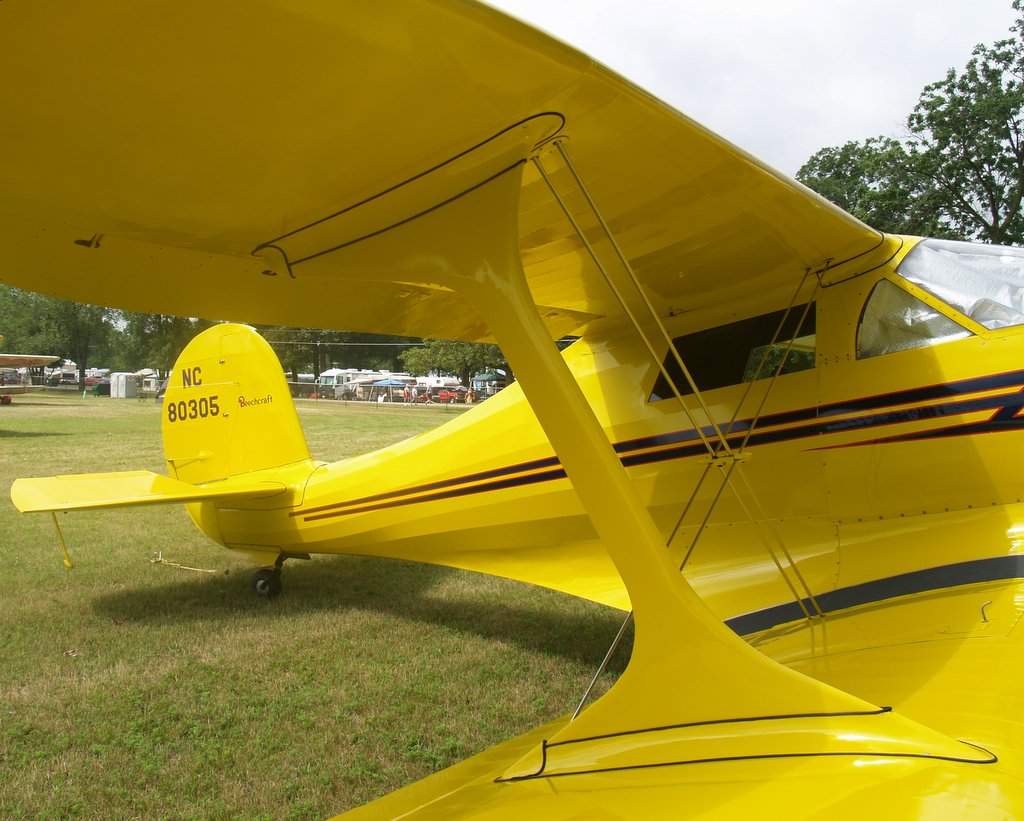
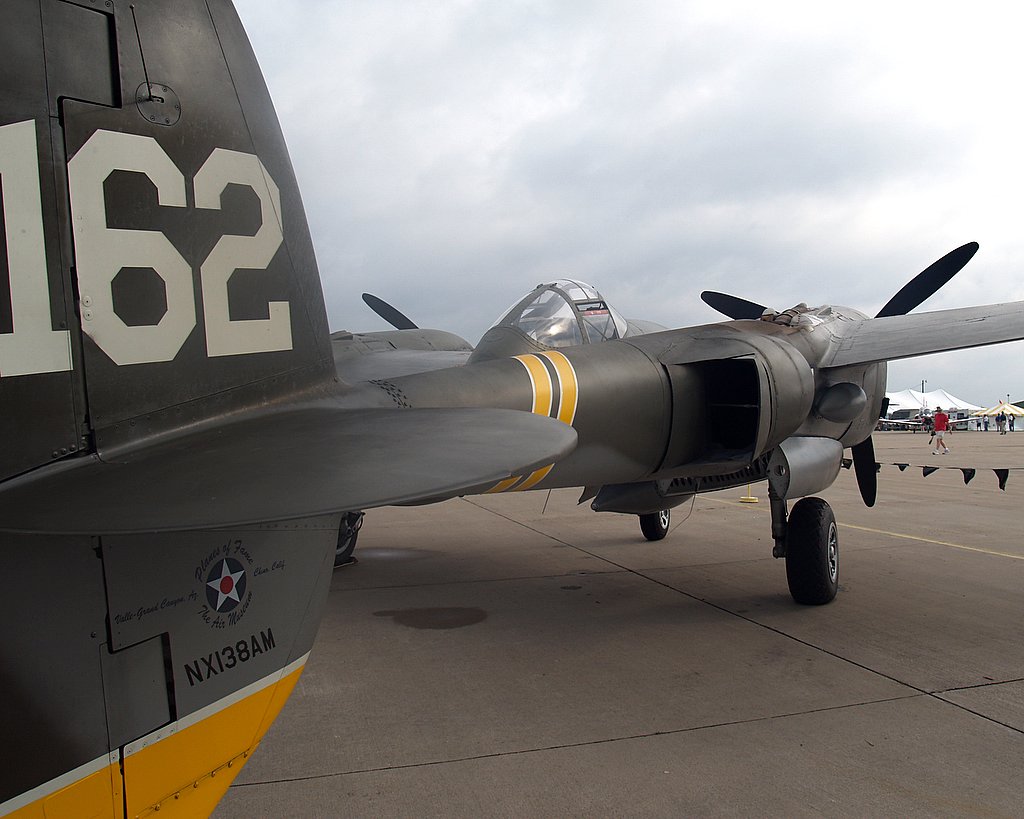
In the action shots, I was trying to balance using a relatively slow shutter speed so the propellors would be suitably blurred but the focus would still be crisp, and succeeded only to a certain extent. You'll see what I mean. The light wasn't particularly good for aerial shots, either.

Blogger seems to jumble the order they appear in whenever I post more than 5 and I usually take the time to straighten them out, but not tonight.


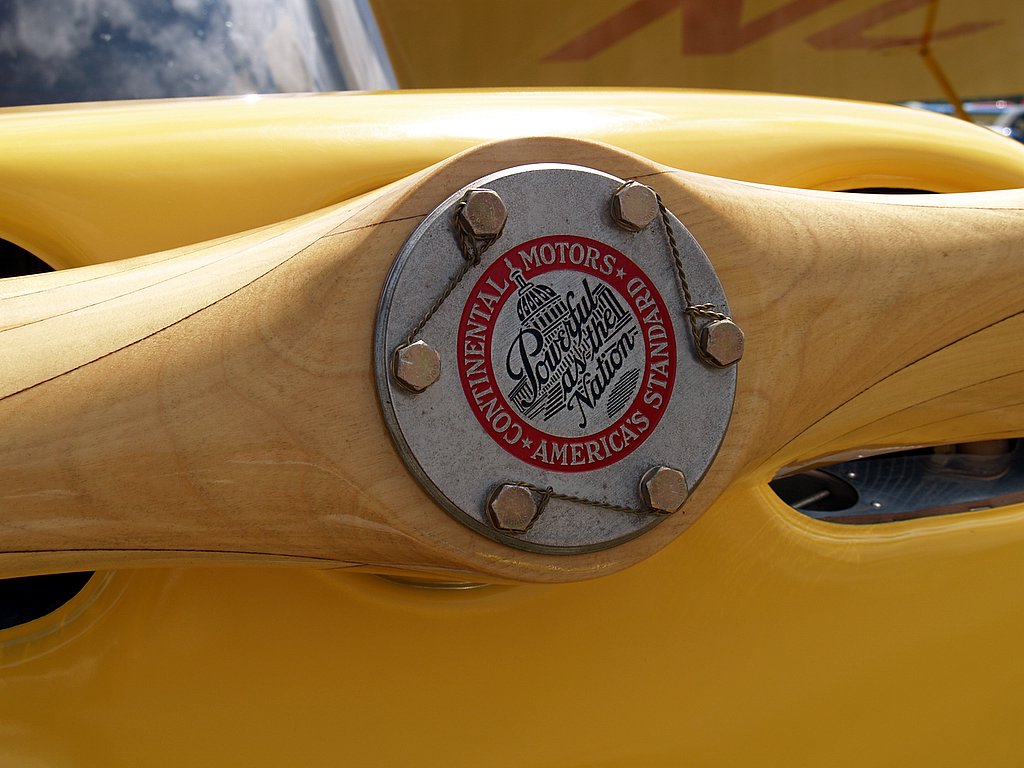
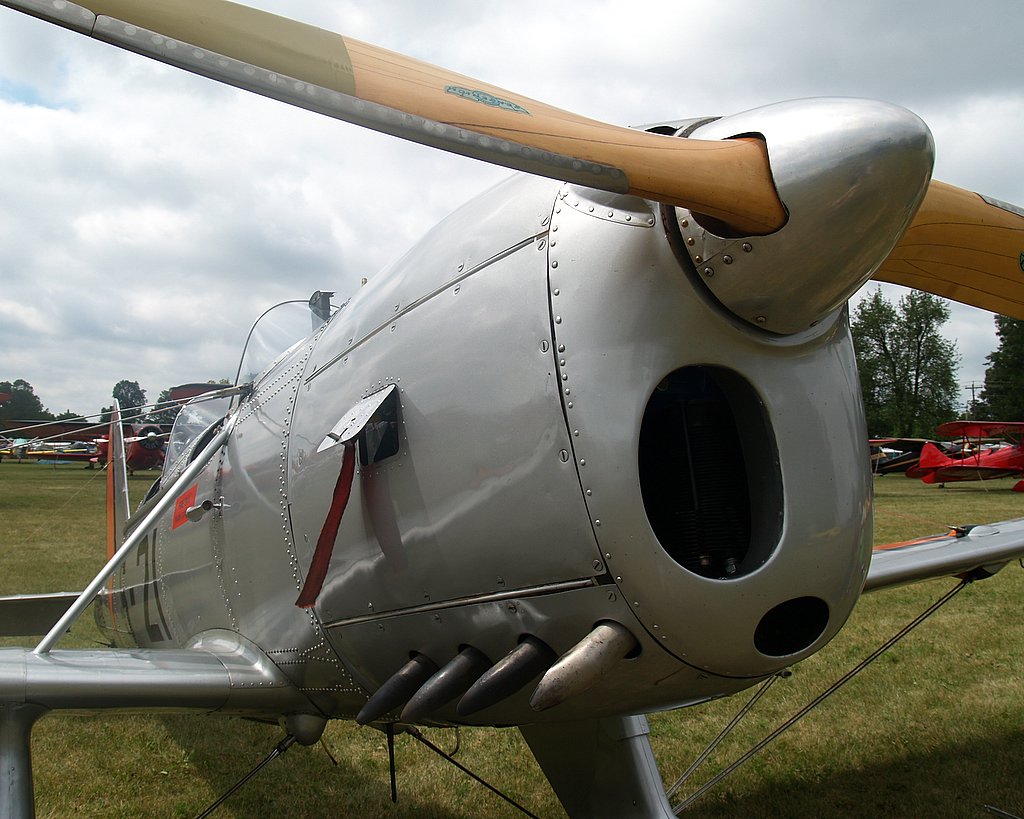
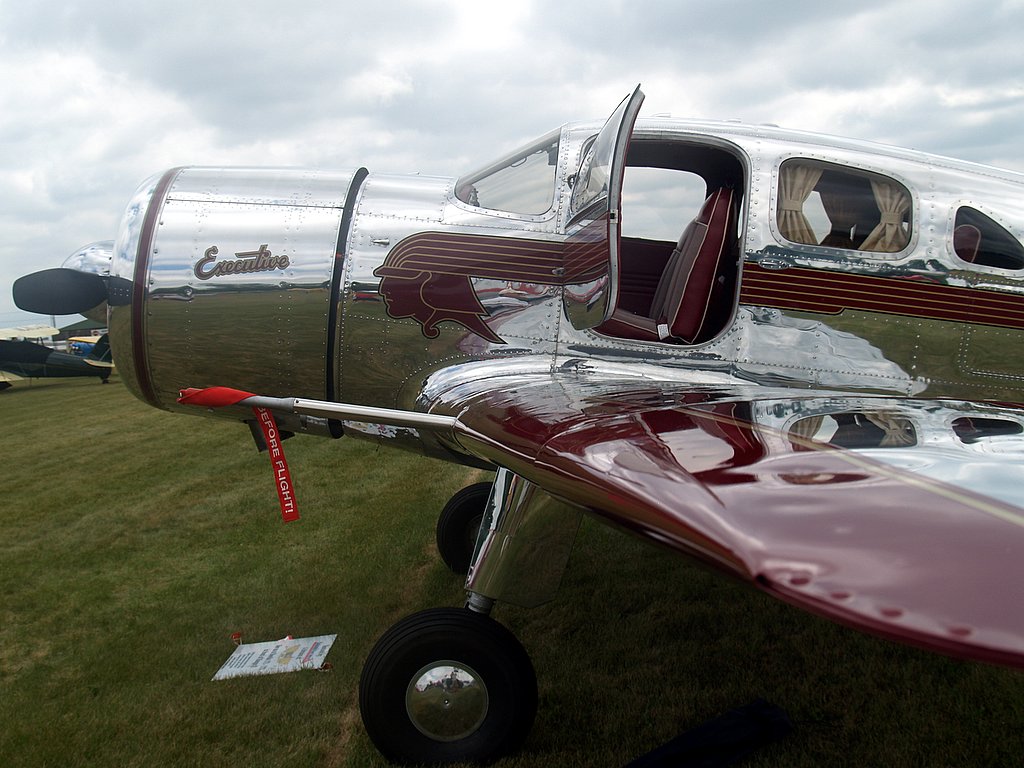
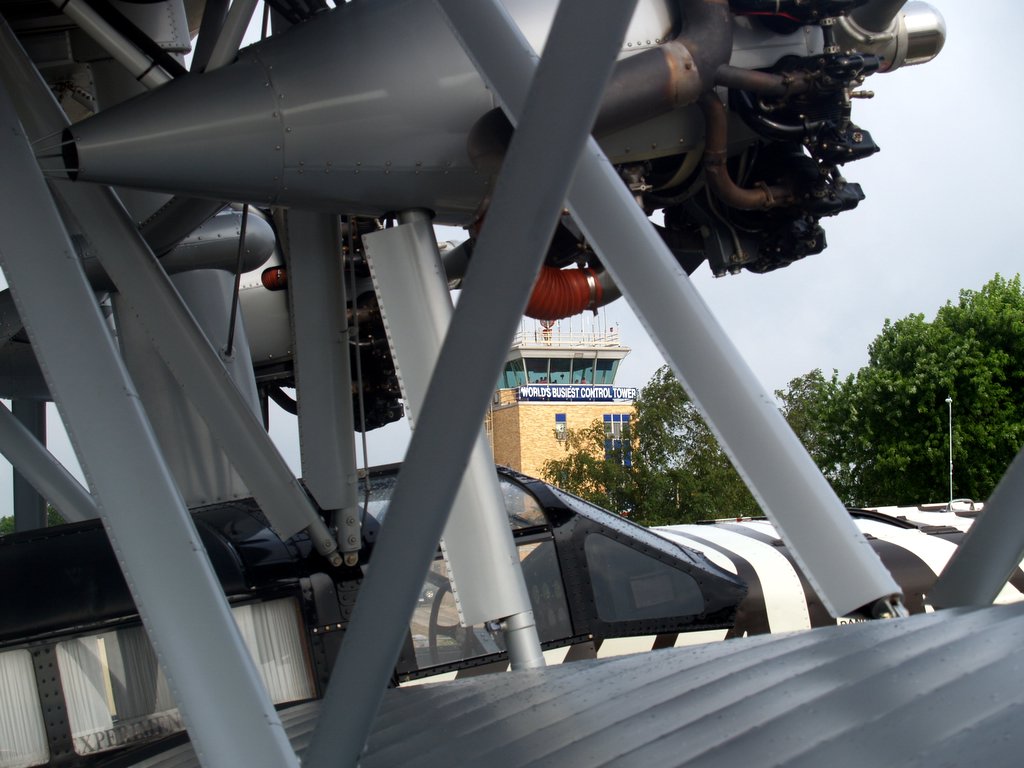
Oshkosh, Day Two

It was another hot, sunny day today with a mitigating breeze, but the inevitable late-afternoon rain arrived earlier than it has for the last couple of days. In fact, it arrived right in the middle of the air show. Not to worry, though: my umbrella and rain suit remained safe and dry in the trunk of the car. My camera, on the other hand...

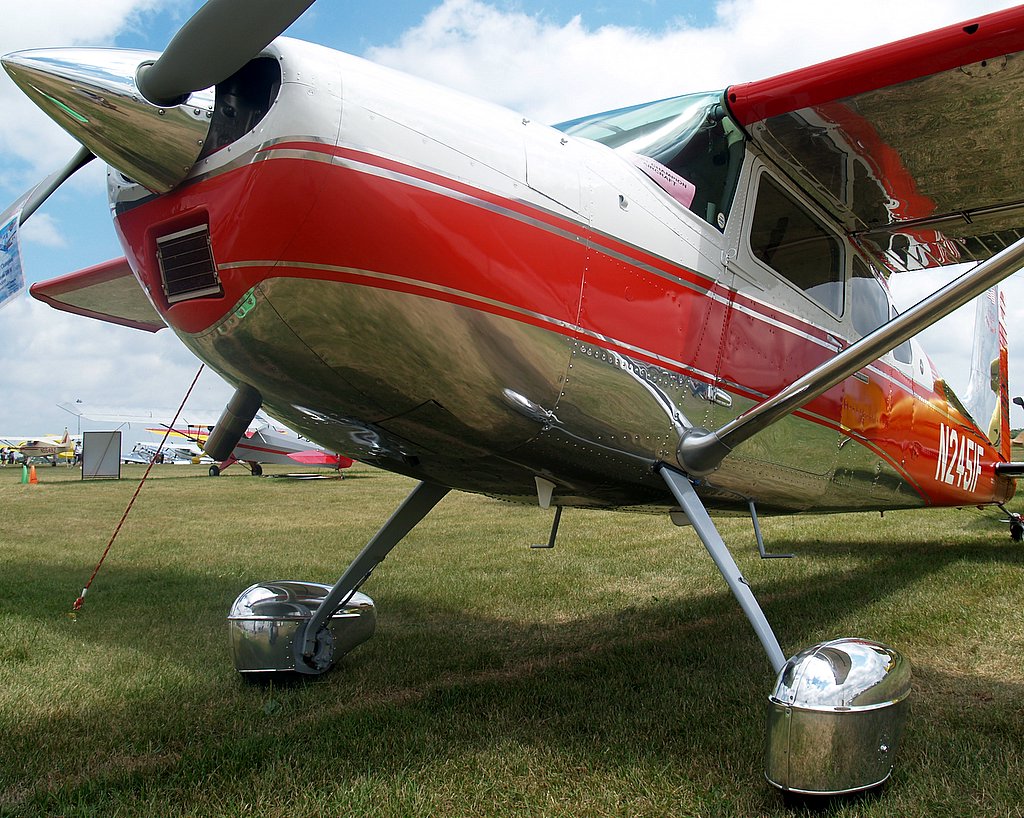
Having toured the War Birds area yesterday, today was open for heading over to my other favorite section: the Classics. I also walked through what they're calling the LSA Mall and looked at some of the new designs available in the Light Sport Market. It's almost like looking at Formula race cars and comparing the wildly different design approaches taken to get the best performance possible within the constraints of the formula rules. In the Light Sport formula, there are restrictions on the number of seats (maximum of two), speed (maximum of 120 knots), and other limits on things like weight, etc. They all seem to have aimed at a common price point, though, with the apparent belief that a six-figure price would mean certain death in the market. I'm not sure I agree, and time will likely show that this market can also include very sophisticated and/or luxurious designs.

I'd love to get some of the pictures posted (another 400+ today), but by the time I have dinner, get back up to the motel in Green Bay, clean off the many coats of dust the sun screen has collected, and get the pictures copied over the laptop, there's just not time to weed through them looking for the keepers, do the work of cropping and adjusting the colors, contrast, and lighting, and get them posted to Blogger. The laptop screen isn't the best for evaluating color and lighting anyway, so even if I could get it done I'm not sure they'd be up to standard.

My big purchase for today was very low in cost, but very high in value. Ever since I replaced the fuel caps, it's been very hard to open the locking latch. Today I found a little $2 plastic gadget that's sort of a bottle opener for fuel caps. The damage it saves to my hangar key alone will be worth the couple of bucks.

Day three is reserved for socializing, I think. We'll see.

Tuesday, July 25, 2006

Oshkosh, Day One

We drove up yesterday, and suffered a major thunderstorm with pea-sized hail once we got here. I was concerned that such weather may become the hallmark of Oshkosh 2006, but today refuted that notion convincingly. It was maybe 85 degrees, sunny, and we enjoyed a great breeze (which likely wasn't quite so great for those who chose to fly up, but I choose to be selfish on this one) today - perfect weather for a fly-in. So perfect, in fact, that I shot 508 pictures! I won't be able to upload them until later - the camera battery is dead. That could have been frustrating, but it died as I took the final picture that would fit on my memory card. That in itself wasn't terrific since there were still picture-worthy events subsequent to the untimely loss of photographic capability, but at least card capacity and battery capacity get to share the blame.

That said, I can share the news about my biggest ever Oshkosh purchase now and get the pictures up later. I've been longing for in-plane weather ever since I heard about the Garmin 396, which downloads weather from the XM radio satellites and displays it on the GPS moving map, but at $2495 I was very reluctant to buy it. Between the price and the probably irrational, yet very persistent, animosity I still feel towards their tech support over wanting to charge me $250 to tell me the equivalent of the Microsoft three finger salute in order to fix a system crash (that their software was responsible for in the first place!), I was hoping for an alternative to holding my nose and throwing what to me was an enormous amount of disposable income to Garmin. I found what I was looking for with the Anywhere Wx, which was not only $1000 lower cost, but has a nice collection of benefits over the Garmin solution, at least with regards to my personal situation. And buying it here saved me almost $300 over what it would have cost had I ordered it over the internet! I'll talk more about it when I get back and install it in the plane and see how it works in flight.

It was a long, hot day, and I want to get the pictures off of the memory card and onto the laptop so I can clear the card for tomorrow. Hopefully I can get a few pix up soon.

Wednesday, July 19, 2006

Pants on, speed gained, early regrets

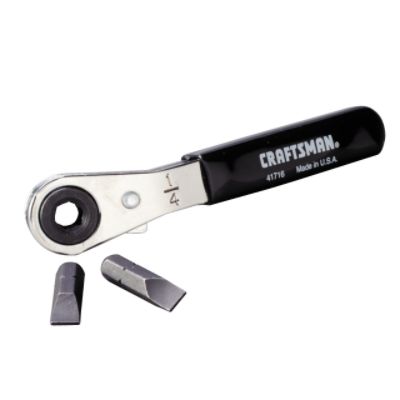
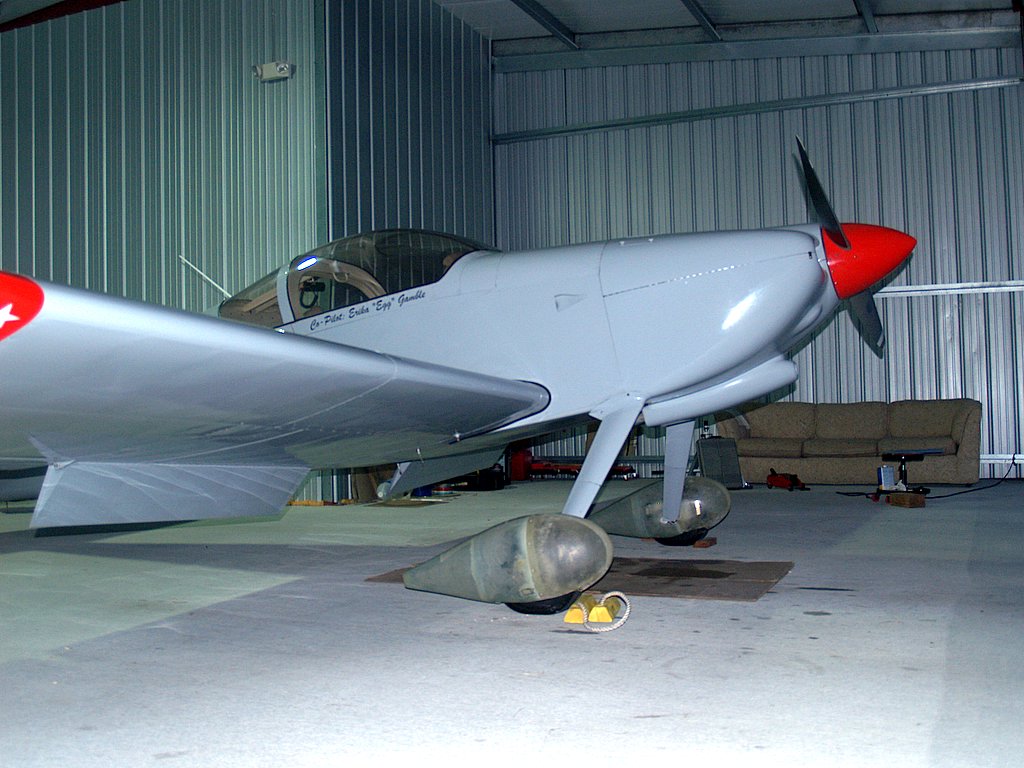
I put the pants fully on for the first time last night, and promptly ran into something I wish I had given a bit more forethought to. As I was putting in the screws that hold the front halves to the back halves, both sides exhibited a really annoying problem. Because of where I placed the screw holes on the side closest to the gear legs, I can't get a full size screwdriver on them. I have a stubby screwdriver I can use, but it's hard to get a good grip on. Ah well, nothing that can't be fixed some time down the road.


I made my first flight with the pants on this afternoon, and as usual whenever there's some doubt as to whether all of the parts will stay attached to the airplane, I headed over to MadCo. I climbed to 5500' to ensure that anything that fell off would achieve sufficient velocity to bury itself deep beyond recovery by anyone wishing to track down the airborne vandal that dropped it.

So, at this point I will answer the two most likely questions: No, and 9 knots. No, nothing fell off, and the speed gain at WOT (wide open throttle) is 9 knots over having no pants on at all. Well, let me caveat that by saying I didn't have a scientific baseline to compare to, and the speed measurement from today was measured by going west for a few minutes then turning around and going east for awhile. It's a very calm (and HOT) day, so the east-west speeds were nearly identical: 160 knots west, 159 east. I don't often fly at WOT, usually reducing to about 2500 rpm to keep the noise level down. At 2500, I've been seeing 145 or so knots. Today at 2500 rpm, I was doing 154 knots. So, despite the non-scientific testing, I'm claiming a 9 knot increase going from no pants to the new pants. I'm hoping for another 3 - 5 knot gain when I do the rest of the fairings.

The pants are still not painted, and I have not cut a hole in the sides to provide access to the schrader valve in the tires, so they will have to come off again. But that ain't happening until I get a set of these:

Sunday, July 16, 2006

Cleveland HarborFest

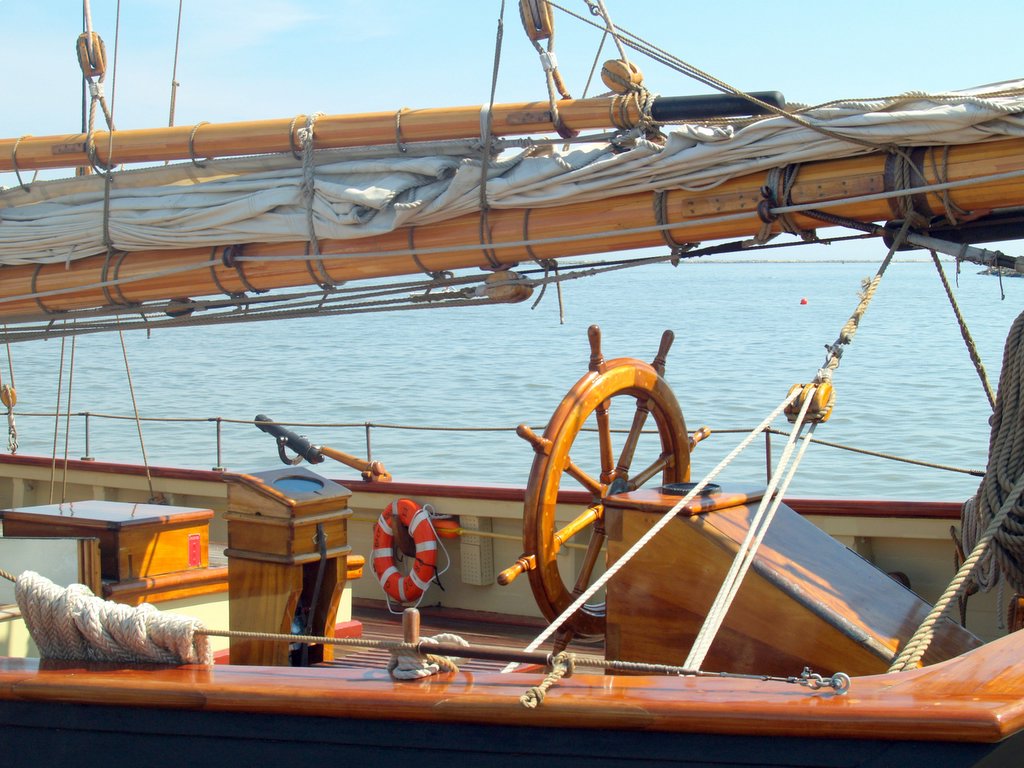
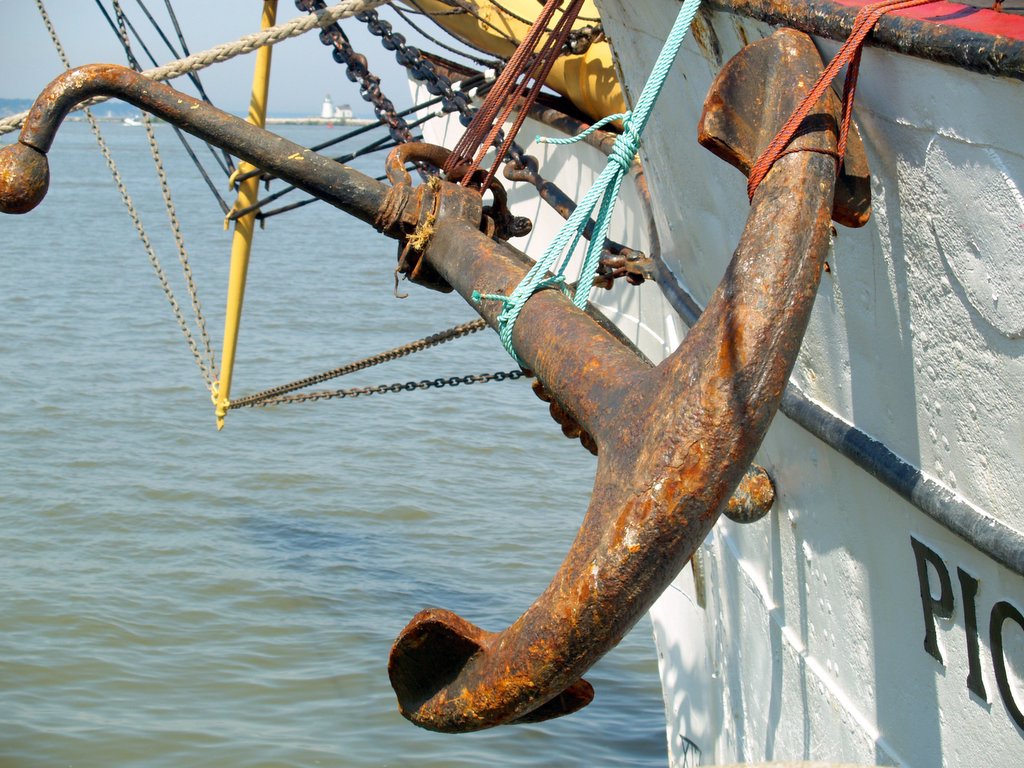
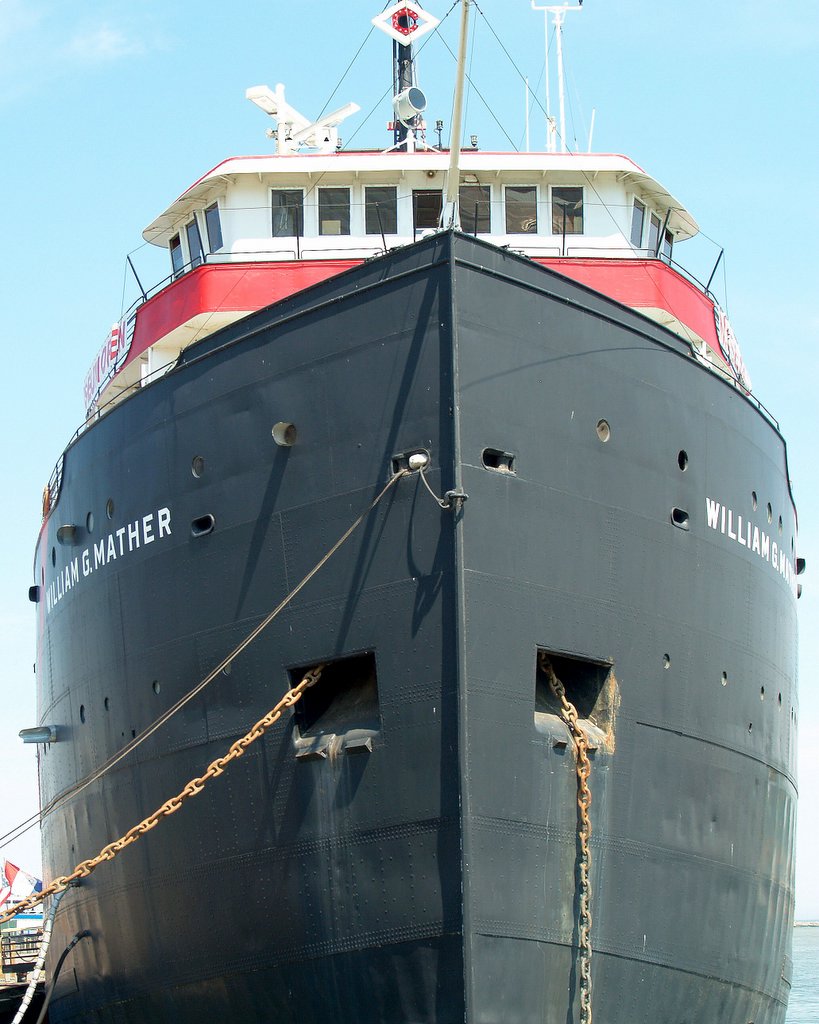
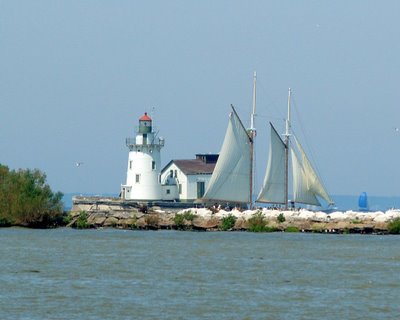
I must have misunderstood when I heard that Cleveland had their HarborFest scheduled for this weekend; I could swear I heard Harbor Freight Fest. Alas, rather than booth after booth of deeply discounted tools, all they had at the HarborFest was a collection of really tall sailing ships. Having been a big fan of the Horatio Hornblower novels when I was a teen, I've always been intrigued by the tall ships but I've never really seen one up close. This was a great opportunity to do so, and was well worth the effort of leaving the nicely air conditioned house to experience the joys of a 90-90 (90 degrees, 90% perceived humidity) July day.

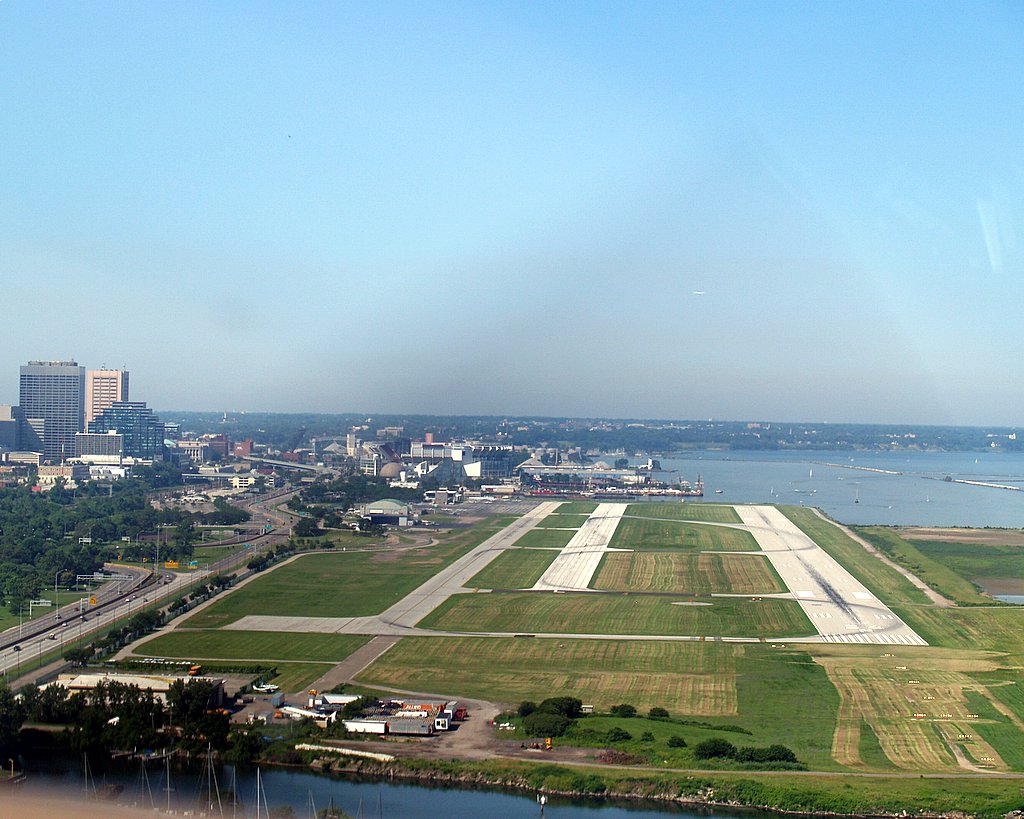
Cleveland's Burke-Lakefront airport is one of the gems of Ohio general aviation. It's location right on the edge of Lake Erie, and within easy walking distance of numerous touristy attractions like the Rock & Roll Hall of Fame, a science museum (and if it seems like I give it scant attention, understand that the point where I knew I had failed in my quest to imbue a passion for aviation in Co-pilot Egg was the day I asked her if she wanted to fly to that museum, and she asked if it wouldn't be easier to just drive to COSI. Ouch!), Browns Stadium, and my favorite, the USS Cod WWII submarine. It's also very close to downtown, and one of these days I'm going to see if I can make my way downtown to the art museum. On the downside, that prime location means that it is located within the most complex airspace I ever deal with: the dreaded Class B.

It's not actually that bad, but it does have the problem that you can be refused entrance. That's not always doom because the typical Class B airspace is shaped like an upside-down wedding cake, with the Bride & Groom figurines positioned right on the center of the big airport that requires the Class B protection, which in this case is Cleveland-Hopkins. Because of these "shelves" under the Class B airspace you can usually duck down under and get where you're trying to go, albeit at a lower altitude than you may have preferred. So had I been willing to trade some of the security and visibility gained from a higher altitude for the ease of not having to deal with the Cleveland Approach controllers, I could have done so. I decided I could use the practice, though. Working with ATC is a skill that erodes without practice, as we will soon see. I contacted Approach as I passed over Mansfield VOR. They responded with the not-the-best-possible-answer of "Stay OUT of Class B, stand by for further advisory." Well...... crap. As the outer rim of the Class B appeared on the Garmin moving map GPS, I started to wonder if I was going to have to orbit around waiting to get the clearance to enter. It seems that they were having an inordinately difficult time working with a Mooney pilot that missed more calls than he responded to on the first contact from ATC. That kind of thing is frustrating for all involved, and I think the sighs of relief were mutual when the Mooney finally left their airspace.

Just as I thought for sure that I was going to have to refresh my memory as to the max altitude under the outermost shelf, the controller came back on with a transponder code and a vector. The direct approach to Burke would take me right over the top of Hopkins, so I was offered the choice of going around it to the north or south. After a mental coin flip, I decided on north, thinking that would give a nice view of the harbor on the way in. What I didn't think of was that I was going to get sent pretty far a-sea over Lake Erie before I got turned back towards Burke. I'm not particularly uncomfortable with flying over water, but what little discomfort I do feel is typically mitigated by staying at a relatively high altitude. Under Approach Control, though, I didn't have that kind of autonomy in the decision. They had me down at 2,500' which was a bit lower than I would have preferred, but it did, in fact, provide a pretty good view of the harbor and the downtown area.

The wind was the calmest I've ever had at Burke, and was a complete non-factor on the landing. I still haven't come up with anything else to blame it on, though. It's always neat to land there and look at the rubber tracks on the runways left over from the Champ Car race they have annually.
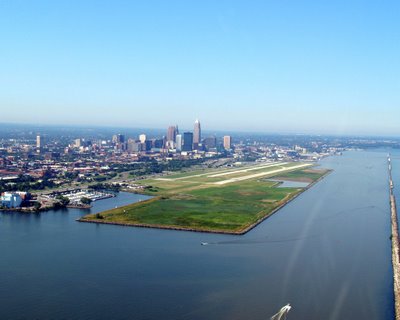
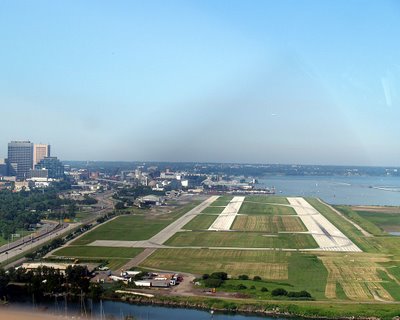


I parked in front of the main terminal which incurs a $5 parking fee, but on the walk over to the harbor I saw that they were getting $10 to park a car. The economic advantages of owning an airplane never cease to amaze me! (Heh!) It was getting pretty hot by that time,and with the forecast calling for highs in the mid-90s, I knew it was just a matter of time before it got worse. That said, the ostensible purpose of this trip was to field test my new camera equipment before going to Oshkosh and since high temps and a lot of sun are par for the Oshkosh course, another opportunity for practice arose. As it turns out, a number of my pictures came out with a deep blue hue that I simply cannot explain. I'm sure glad that didn't happen up in Oshkosh!! At some point, whatever was causing such sadness to the camera (it was very blue - get it?) cleared itself up and I got some nice shots of the ships/boats. (I never can tell the difference between a ship and a boat, and have noticed that those that can are pretty snooty about it, so I cover all my bases with the "ships/boats" cop-out!)
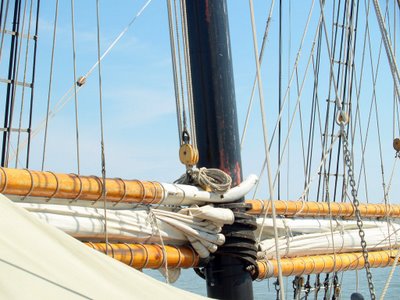

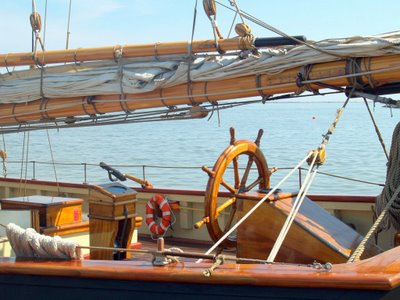
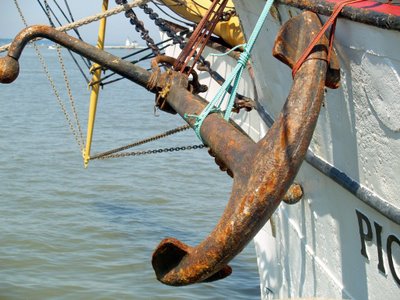
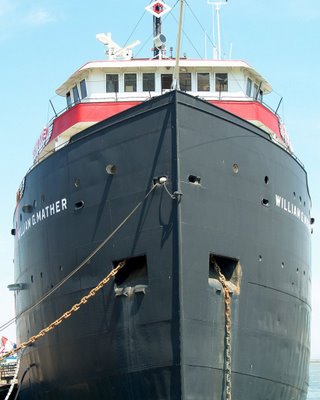
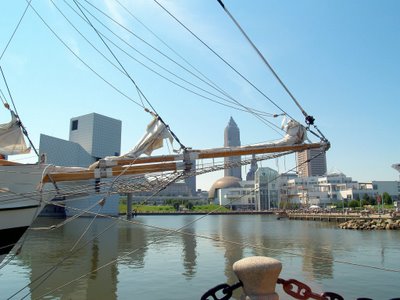

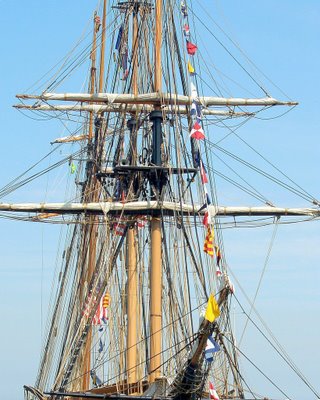


It was too hot to even consider standing in line for on-board tours of the boats, so I satisfied myself with a couple of hours of walk-about, and decided to head home. My passenger (Rick, who really should have been home working on his plane) agreed, so we hiked back to the airport. At this point I need to share a piloting tip that took me a couple of hundred hours to learn. If you, like me, simply cannot remember to remove your chocks before trying to taxi, just do what I do: tell your passenger that it is his/her job to remind you. Then, after you have both forgotten and only remembered when the throttle got pushed forward but the scenery steadfastly refused to begin moving, you can blame the entire embarrassing incident of having to de-plane and remove the chocks (in the shadow of the critical observer in the control tower) on him/her. Actually, depending on the distance from home, you might actually be able to get him/her to do the actual de-planing! Oh, please don't ask me how I learned this, or what reminded me of it.

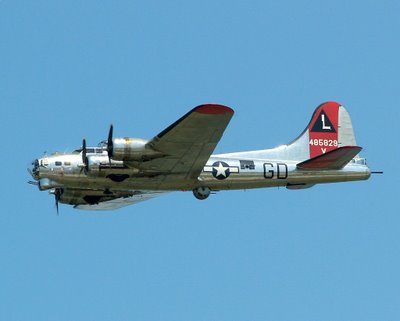
The departure out of Burke was to the west, right past all of the festivities at the harbor. A B-17 had just flown a couple of low passes (participating in my Oshkosh field-test, seemingly), so I chuckled as I wondered how many of the folks down there thought they were seeing a WWII fighter fly by as we went over. There was another plane coming in from the west and as he saw us pass by his left wing, I heard "pretty airplane" come over the radio. Ah, all the perks of reflected celebrity with none of the burdens of notoriety: what more can one ask from a simple airplane!


I thought it would be a simple deal to stay low over the lake below the Class B shelf and get a quick approval to climb from Cleveland Approach. Well, it wasn't. While I was trying to make initial contact, some guy in a small Beech twin was apparently doing instrument training, and chose an airport dead-nut in the center of Class B airspace to use as practice. Hopkins is a big airport and the controllers there deal day-in and day-out with professionals whose goal is to get the plane on the ground as efficiently as possible. Well, this fella wanted the "full approach," which is a time-consuming operation best practiced at less busy airports. The controller was peeved, and put on the drippy "screw you" pedantic tone as he explained to the guy why this wasn't the best environment for his demands, and having listened (impatiently) to the entire exchange, they were demands. Really, this guy had ensured he wasn't going to get what he wanted basically from the get-go with his attitude and tone, but the back-and-forths took up a lot of air time. I finally got through, but was rewarded with another "stay out." I wonder if this is why a lot of pilots avoid flying into Class B airspace. It's not at all bad once you get used to it, but at first you're convinced you're going to screw up and get your license yanked and it takes a bit of time to get over that. It also requires a lot more faith in the airplane since you relinquish your right to decide at what altitude at which to fly your approaches and departures, and that level of faith may not exist in a lot of pilots flying flight school rentals. Had I known this morning what I know now, I probably would have just planned on skirting in under the Class B rather than try to get worked through it, but it was good practice - I don't want to be the guy fumbling around missing calls and such.

After 10 or 15 minutes of stooging around down in the heat and climbing bit by bit as the shelves got higher, the end of the Class B was in sight. The controller chose that moment to get buddy-buddy and ask if I was heading "up to the northwest" next week, which is apparently the code word for Oshkosh. He shared that he was going to be a controller up there. This got me to thinking: this guy is apparently familiar with homebuilts, but left me down there at 1,000' over a very pilot-unfriendly Lake Erie for 20 or more miles, rather than let me climb through what, judging by how much time he had to chat, must not have been very busy airspace. Ah, well, I'm sure there was a reason - you can't tell how busy approach is by talking to just one controller. Next time, though, I'll depart east so I'll at least be over terra firma if I get stuck below the shelf.

The tach reported just over 2.0 hours for the round trip, and although neither landing was all that wonderful, it seemed a well-flown trip. Well, other than those damned chocks that is.

Tuesday, July 11, 2006

Trying on new pants

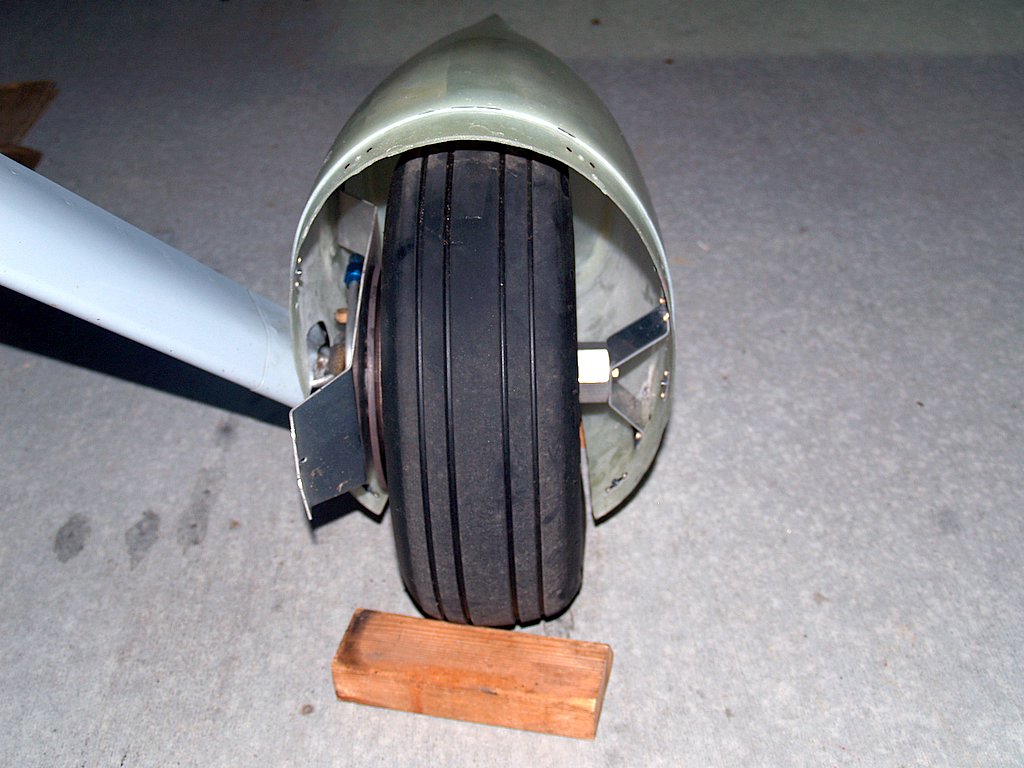
I've been working on the wheel pants for a couple of hours at a time over the last few days. I finished laying up the glass to fill in the space between the vertical brackets and the sides of the pants, and just couldn't put it off any longer: I had to level the brackets and get the pants aligned again, then drill the holes for the rivets that would attach the brackets permanently to the pants. Yep, permanently. One way trip. No turning back. Pressure, pressure, pressure.

I couldn't see the pre-punched holes in the brackets through the fiberglass, nor could I fit the drill inside the pants to drill out through the hole and glass. I borrowed a bottle of Street Walker Red nail polish (not saying from whom), cut the heads off of a Q-tip, dabbed the Q-tip in the nail polish, and marked the spot on the glass where I needed to drill by pushing the Q-tip through the holes in the bracket. It worked pretty well for the most part, although I was concerned about being the first RV dude to drill a #40 hole in his tire.


Once the holes were drilled, I dragged the pants uptown to have the rivets squeezed in. One of these days, I really should think about getting a rivet squeezer of my own. In any event, the riveting was a piece of cake. I couldn't wait to get back to the hangar and bolt the back halves on for the first time.


Tonight I rough-trimmed the front halves just enough to fit them to the back halves.


Tomorrow I'll lay up a little glass in the area where the pants attach to the horizontal brackets, drill the holes for the screws and nut plates that will provide said attachment, and rivet the nut plates onto the brackets. At that point, I think it'll be ready for a test flight. Assuming I return with all of the parts I depart with, all that will be left (for now) is the finish work. Lots of sanding, priming, sanding, and priming later, I'll put on some placeholder paint. Then it's simply a matter of waiting until later in the year to add the gear leg and intersection fairings.

Sunday, July 09, 2006

The Fellowship of the Travelling Pants

There's a chick-flick, based on a chick-book, called "The Sisterhood of the Travelling Pants." I got to thinking yesterday that part of the appeal of the RV-ish fly-ins, particularly for the folks that are still building their planes, is the array of completed planes to look at and garner hints/tips for performing various tasks. For me, of course, the primary focus was on wheel pants, hence the title of this posting.

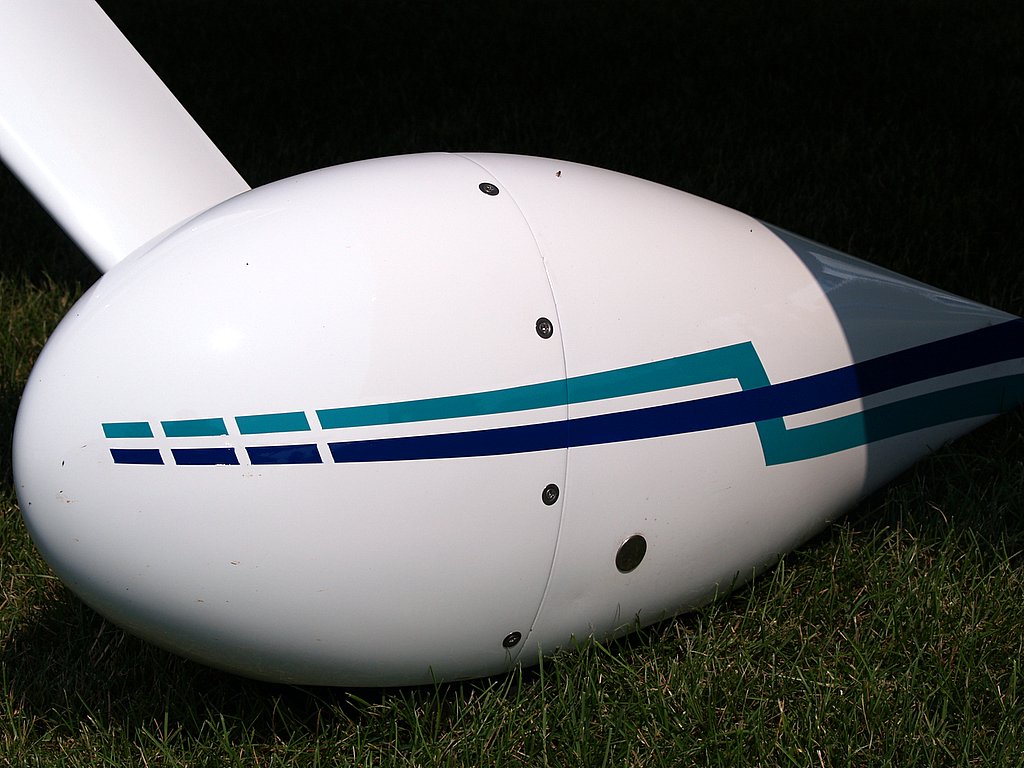
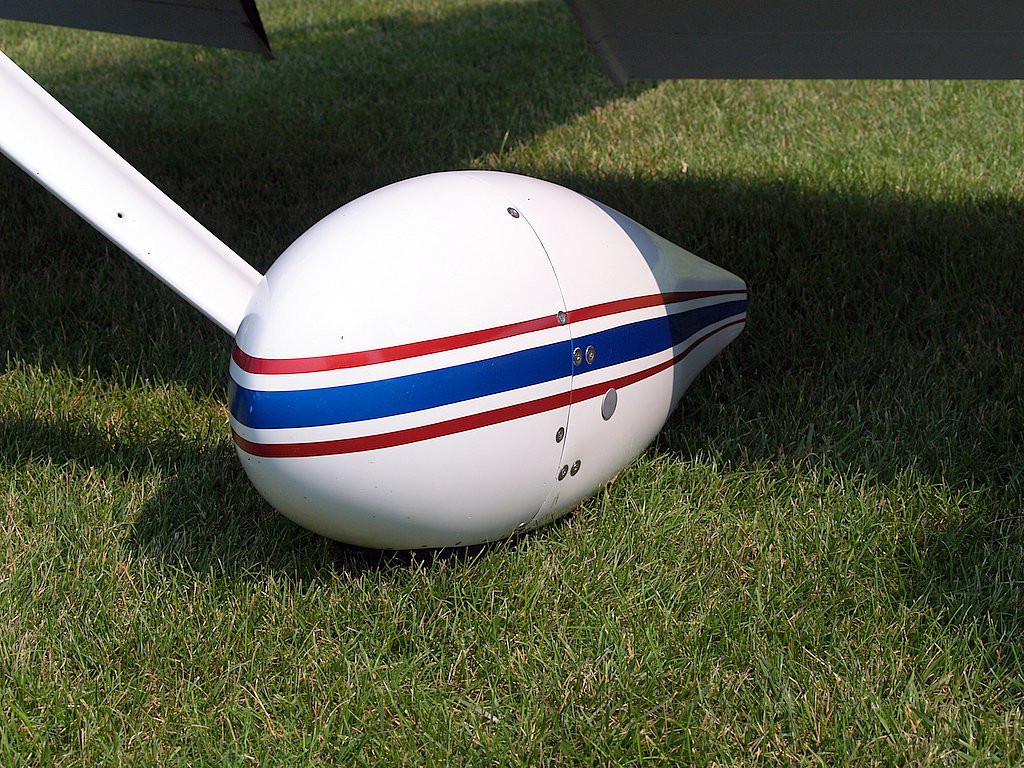
I'm currently very interested in the various methods of attaching the back halves to the vertical bracket, and near as I can tell there are three approaches. Going strictly by the plans, the pants get riveted to the bracket with size 4 (4/32", or 1/8" if you do the simplification), but I've also heard from a guy that followed the riveting with glassing over the bracket ends. Yesterday I saw a third approach: screwing it on. I'm not sure what the benefit of that is, other than I wouldn't have to borrow a rivet squeezer again.

The riveted approach gives a cleaner looking installation:


But there are so many screws in these things already that using the screw-in approach doesn't really make all that much difference:


Either way, both of these pictures reminded me that I need to drill a hole to allow access to the shrader valve so I can check the tire pressure and refill as needed. I don't think that's ever mentioned in the plans.

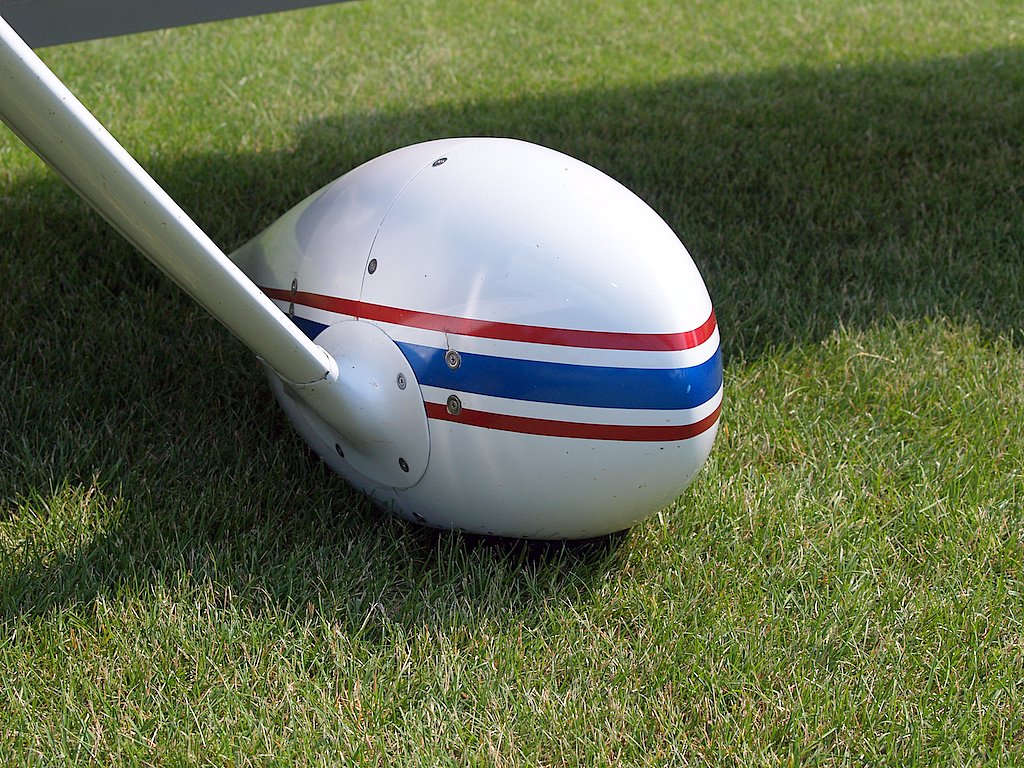
I also took advantage of the opportunity to look ahead to one of the later steps, which is how to attach the lower intersection fairing. One method is to cut the trailing edge of the fairing, slip it over the gear leg fairing, and attach it to the wheel pants with screws and nut plates mounted inside the pant:


The other approach is to split the fairing with a vertical cut, and glass the resulting halves to the matching pant halves:


I saw a builders log that used the latter method, but after the in-flight loss of the back half of the fairing he re-did it using the former method, which is I believe also is the per-plans method. (There's more to the story than that simple synopsis, which you can read about here. Part of the impetus for the change was an unfortunate incident at a fly-in.) In this case, however, there is a distinct benefit in one of the methods. The vertical split method makes the intersection fairing an integral part of each of the pant halves, making removal and installation a bit easier by reducing the number of screws that have to be dealt with. Nut plates hold into the screws pretty tightly, so it's not at all unusual to round out the heads now and then. It's not expensive to replace worn screws with new, but it's an additional hassle none the less.

I haven't decided which way I will ultimately go with this, although on the face of it, it appears to be "six of a dozen, half of one another." (Note: yes, I know that's a butchery of the phrase, but I use it now and then to see if people are listening. Just a little personal language prank - I'm like that)