Thursday, May 10, 2007

Harvey Six wins!

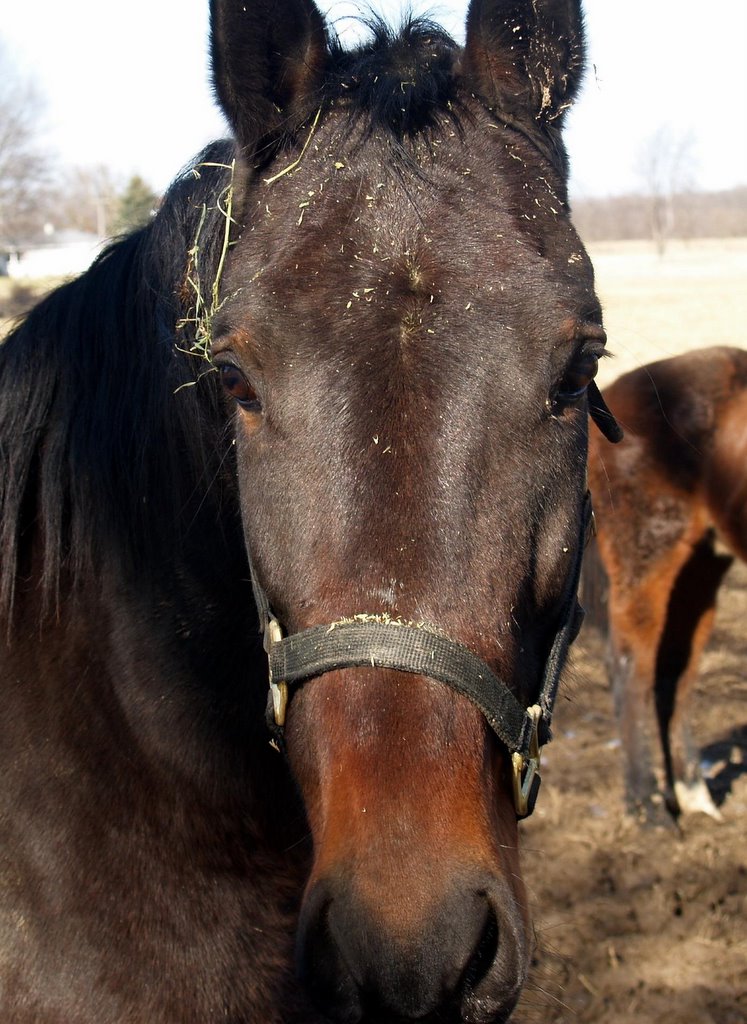
An event which is pertinent to the blog because the correct pronunciation of the name (or so I now declare using blogger's license) is, of course, 'Arvey Six, with the 'H' being silent in what I believe to be (and am far too lazy to research) the Cockney way. Who knew there could be so many puns on 'RV-6'??

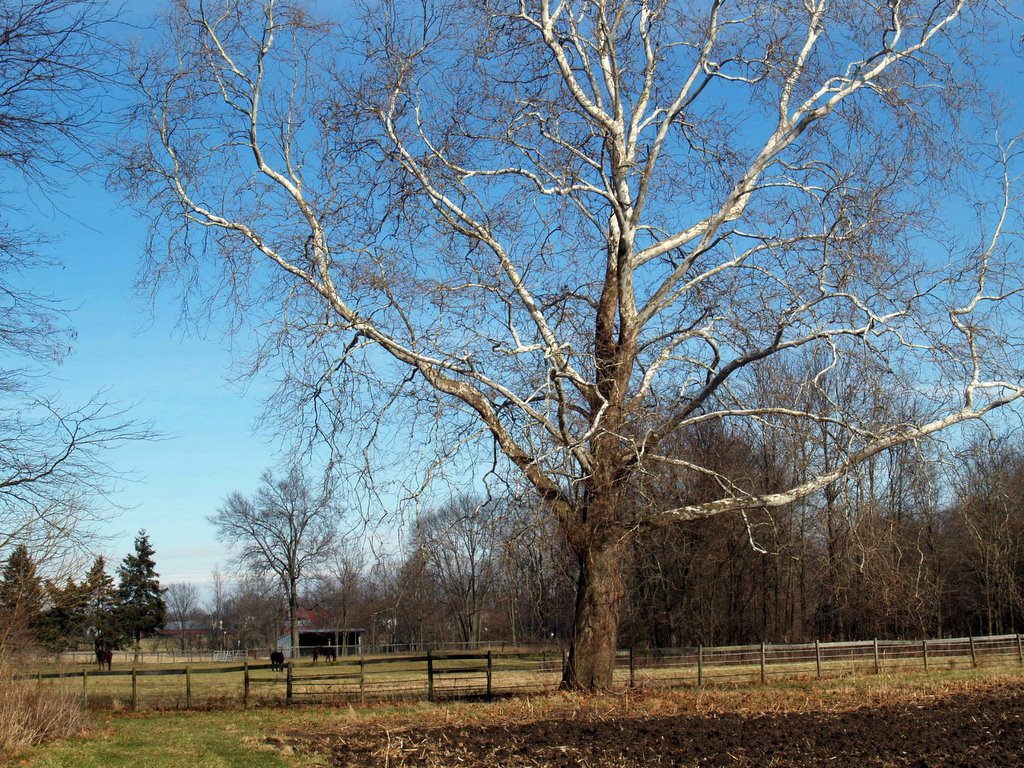
'Arvey Six is a Standardbred Pacer that belongs to my parents, whose farm is known as Big Hat Stable. You've seen pictures taken at the Big Hat here before, but these are probably the most memorable:


In any event, here is the article describing Harvey's accomplishment. All I've got to say is that RVs are stellar performers, even the one horsepower models.

Harvey Six Wins First Round Of Trimble Series

by: Ryan Hubbard
May 9, 2007 --

Harvey Six fought back gamely in the stretch to take the first round of The Tubby Trimble Series Wednesday, May 9. Driven to the winner’s circle by Jeff Nisonger, it was the first career victory for the three-year-old gelding, pacing the mile in 1:55.0. The time was the fastest of the two non-betting divisions held over a fast track.

“He (Harvey Six) raced really well tonight,” said Nisonger. “We changed some things on him this week, so he has a new training style. We tried to turn him out this week also. He is showing some really big improvements.”

Harvey Six started from the gate in post position four in the field of seven starters. He was able to get away in the pocket to the second spot around the first turn.

Passing the third-quarter in 1:26.0, Harvey Six fell back as far as fifth after coming off of the top of the stretch. Cutting between horses in the lane, the Dream Work product gunned it home.

Using a final panel of :28.1, Harvey Six and Nisonger rallied to pass leader Hoosier Alibi and driver Joe Essig Jr. The late move proved to be the key one as the duo got to the wire just in time to win by a final margin of three-quarters of a length. Hoosier Alibi held on to finish second. Kentucky Lukas, with driver Jay Cross, rounded out the top three.

“I wanted to try to stay up close in the race,” said Nisonger. “It was just hard after they were going :26.4 in the first quarter. I knew I needed to get out in the stretch to try to win. This group went a really good mile. In the long run, it worked out.”

Harvey Six is one for five this season, including one second place finish and two third place outings. He finished fifth in the $12,000 Jerry Landess Series last month at Hoosier Park. The Indiana-sired horse is owned by the Big Hat Stable of Bradford, Ohio. He is trained by Steve Livingston.

Monday, May 07, 2007

I was wrong, DDT is better

I thought that I should follow-up on the results of my recent insect control patrol with a reconnaissance of the local area tonight, and I'm afraid the results don't speak well for the efficacy of my application of the leading edge of a wing to the problem. Oh well, it was worth a try. And they clean off easily enough if you wipe them off after every flight. I don't like to wash the canopy that often though, me being in literal terror over the idea of introducing scratches to it's pristine finish, so I'll be looking past and through their little splattered remains for a few more flights.

This evening's recon flight had a secondary mission: refill the depleted fuel tanks over at MadCo. The winds were fairly calm, but tending to be from the East. That seemed a good opportunity to try my luck at one of my more nemesis-like runways. I've very rarely had a good landing on Runway 9 at MadCo, and I distinctly remember one of the worst being the landing on the way back from Oshkosh. My landings have been causing me a fair degree of angst lately, so I was anxious to get a little practice in while the prevailing weather conditions were so favorable.

The lighter winds would make me more comfortable with slowing the plane down enough on final to reduce the chance of a big bounce. When it's windy, or when I'm flying a heavy plane, I'm more reluctant to get the plane slowed down to below 70 mph. Having it down to 65 mph usually results in a better landing, but gusty weather or the increased stall speed resulting from a higher weight are important considerations as well, and the internal debate nearly always leads me to carry five or so extra miles per into the flare. The result is, of course, as predictable as a Disney horse race.

I'm also trying to address the issue of my premature or late flare (depending on the width of the runway) by looking further down the runway while in the flare. This reduces the optical effect that causes me to flare high on a wide runway and low (or not at all) on a narrow runway by lessening the influence of my peripheral vision. In other words, as you look further down the runway you gain more visual cues to determine your height over the ground. I'm not sure how I lapse into the habit of not focusing sufficiently far down the runway, but once I recognize that I have it's easy to fix. This is a long-winded way of saying that I went two for two on good landings at MadCo.

Back at Bolton the general consensus amongst the touch & go crowd was that runway 22 was best suited for the landing conditions, and being without a compelling argument to differ I slotted in (well, nearly overran) behind a 172 and in front of a Cherokee, while another 172 waited to depart, probably watching the Hobbs in annoyance as this late rush hour held him captive at the hold short line. I ended up extending my downwind to give room to the 172 in front of me, so I had a nice leisurely ride down final. The Cherokee wasn't particularly close so I was in no hurry, but rather than land on the numbers and taxi the remaining distance to the Alpha 3 turnoff, I opted to practice my precision landing skills a bit, what with island flying season hard upon us. It was a nice, smooth landing (but not a greaser) and I made the Alpha 3 turnoff perfectly.

A perfect evening, although I really wish I could remember to replenish my beer supply in the hangar fridge. A cold beer after flying really does lubricate the bug cleaner quite well.

Friday, May 04, 2007

Better than DDT

Having completed the lawn chores, and having copious amounts of nice Spring evening remaining, I decided to do my part in controlling the Central Ohio flying insect population in the most inefficient manner possible: using a 150 hp driven sharp-edged wing to smite them from the air.

Being as that is admittedly an atrociously expensive way to kill a few bugs, I thought it prudent to combine that effort with a wee bit of practice on my landings, which have been notably sub=par as of late. My preferred training regimen these days is to loaf along at a modest 2000 rpm (135 knots - I still get a kick out of that!) to one of our outlying narrow (relative to Bolton) runway airports. Tonight I selected Circleville (KCYO) due to its orientation being directly perpendicular to the light evening breeze, figuring two birds, one stone. Unfortunately, the orientation of the runway was moot as the wind down that-a-way was deader than the insects adorning my canopy. Still, it was a nice ride, followed by a more-or-less greaser of a landing.

Another leisurely ride back towards home base found me entering the pattern behind a Cessna 150. I really had to drop anchor to stay a respectable distance behind him, but that is no excuse for the ensuing debacle of a landing. I bounced it so hard that I could feel the landing gear crouching down to leap into each succeeding bounce like a cat hunkering down just prior to pouncing on an unwary tender morsel. This one really earned a grade of 'F', which stands for 'I hope I never land so effing badly ever again!' Unsatisfied to the extreme, I decided to make a stop & go and try again. The 150 was also a touch & go, and as I climbed out behind him and he just kept going and going on his moribund climb out, I eventually decided enough was enough and told him over Unicom that I was going to go ahead and cut inside him on the crosswind. He was fine with that, his only request being to tell him when I thought it safe for him to make his turn. With him being darn near over the horizon by that time, I felt comfortably safe with telling him that he could go ahead and turn right then and there. Naturally, I was thinking to myself something along the lines of "like you could ever catch me in that thing!"

Having sworn off stress testing the landing gear for the night, the next landing was pretty good. It took a good, long time to clean all of the bugs off of the wings and canopy, though. I definitely dealt a blow to the flying insect population tonight. I didn't do my tires any favors either!

Why we have kids

It's because indentured servants are so darn handy:


Well, that, and because you never know when you might need a kidney!

Seriously, though, this was a big day for the co-pilot. She's waited a long time to be big enough to drive the mower and actually, you know, mow. I've let her drive it around when we had the trailer attached to haul mulch, etc. around the yard, but this is her first time actually mowing. I still had to do around the fence, trees, and other obstructions, and I gave her a big buffer area to turn around in at each end. She did the long, boring back & forth passes in the back yard, though, and given the bumpy ride across those long stretches, it was greatly appreciated. The yard is mature enough now that the only foreign objects that we have to watch out for are the golf balls the [various pejoratives considered, deleted] next door chips over the fence and doesn't retrieve. Well, those, and frogs. I hate running over frogs. In any event, she seemed to enjoy it, and I know for sure that my frail, aging body appreciated the respite.

I'm still hungry

The plan today was to get out of the house a little after 0600 and take a nice morning ride up to Urbana for breakfast. Last night's forecast agreed that this was a most excellent plan. So, what did I see this morning? 800 overcast. Nothing to do but revert to Plan B, which is, of course, the far less desirable option of getting in the car and going to work.

Get to work, not a cloud to be seen.

Flying's like that.

Thursday, May 03, 2007

Tuesday, May 01, 2007

Update: Why don't we dream of flying anymore?

So asks the NYTimes:

Once, nearly every boy had the idea that he would slip the surly bonds of earth and dance the skies on laughter-silvered wings, as John Gillespie Magee Jr., a pilot in the Canadian Air Force, wrote in 1941. Plenty of people still go to school hoping for a job at the airlines flying the big jets, but experts fear that the hobbyist, who flies as an alternative to golf or boating, or perhaps to take the family 100 miles to a beach or maybe just an obscure restaurant, is disappearing.

The number of student pilots is down by about a third since 1990, from 129,000 to 88,000. The number of private pilots is down from 299,000 to 236,000, according to statistics kept by the Federal Aviation Administration. And they are aging.

Some longtime private pilots fear that an industry is withering, and a bit of Americana is slipping away, along with a bit of freedom and joy. And it is happening in part because of lack of interest; Walter Mitty doesn’t want to fly anymore.


They go on to discuss various perceived reasons, chief amongst them time, cost, and a lower tolerance of risk on the part of the newest generations. To some degree, all are probably at least partially valid. It is expensive, and it does take time. But have you ever played a round of golf at a municipal course on a weekend? Eight hours on average. Cost? Depending on the course, easily approaching the $100 that I spent to have a chopped hamburger steak in Portsmouth last week. Risk? Possibly, I suppose. The Times brings up Corey Lidle and JFK, Jr. They ignore the fact that celebrities have been dying in airplanes for decades on end, though.

I spent some time thinking about other possible explanations. One idea that I pondered had to do with the romance having gone out of flying. When I was a kid, my heroes were named Rickenbacker, von Richtofen, Yeager, Glenn, Armstrong, and many others. These days, however, we see things differently. Airline pilots are no longer considered to be The High and Mighty; they are the glorified bus drivers that come on the intercom to tell you that you're going to be late and miss your connection. Fighter pilots are no longer The Knights of the Sky; if they're anything at all to the masses, they are either pawns, mercenaries, or a useless, anachronistic expense. Is this the reason more young people aren't passionate about aviation? I don't know. They do still come to airshows by the hundreds of thousands every year, after all.

I don't know what the problem is, but we as a group can and must be doing things to combat this negative trend. For example, if I fly tomorrow, where will I go? Chances are that I will fly out somewhere to meet with a group of other RV pilots. This insular clique-like behavior may be the problem. Perhaps we should be reaching out to non-flyers in a more meaningful manner. EAA has the Young Eagle program, AOPA has the Mentor program, but are these programs enough? I don't know. They seem to be trying to solve the problem one person at a time. Would it make sense to try reaching more people?

I gave a little talk to my daughter's class a few years ago, and the kids were fascinated by the whole thing. Could I expand that by offering a free "How to be a Pilot" seminar at my local community college/library/high school? I'd be thrilled to do it, but the task of researching subject matter and putting together a nice multi-media presentation is daunting. I wonder if AOPA could (or has, for that matter) put together a package that could be used by willing volunteer presenters in communities around the country, introducing the breadth and depth of General Aviation and stressing that getting a pilot's license is a very attainable goal. That would be cool!

UPDATE: It's not just flying that has this problem. Consider this, quoted from a blog called "The View Through The Windshield":

The old car culture is also undergoing gigantic changes. Many car clubs are suffering. I belong to two clubs - both are experiencing declines in membership. But that's not the big problem - it's the volunteer pool. It's drying up.

My experience is that people start buying old cars when they reach their mid-40s. That's when most guys start getting what the government calls 'disposable income' and what we call 'pissing-around money'. I bought my first collector car when I was 44. I quickly joined two car clubs - both run by people in their mid-to-late 50s and populated by 40-somethings like me. The club's 'elders' encouraged us to get active. We did and, by age 50 or so, we were running the club. The problem is that no one ever came along to replace us. There are few forty-somethings in these car club, despite aggressive recruitment efforts by club members. Those who do join aren't very active and have no interest in volunteering to help run a club. "No spare time," they plead.


Sounds very similar to me. Our productivity gains as a society have clearly come at a cost.